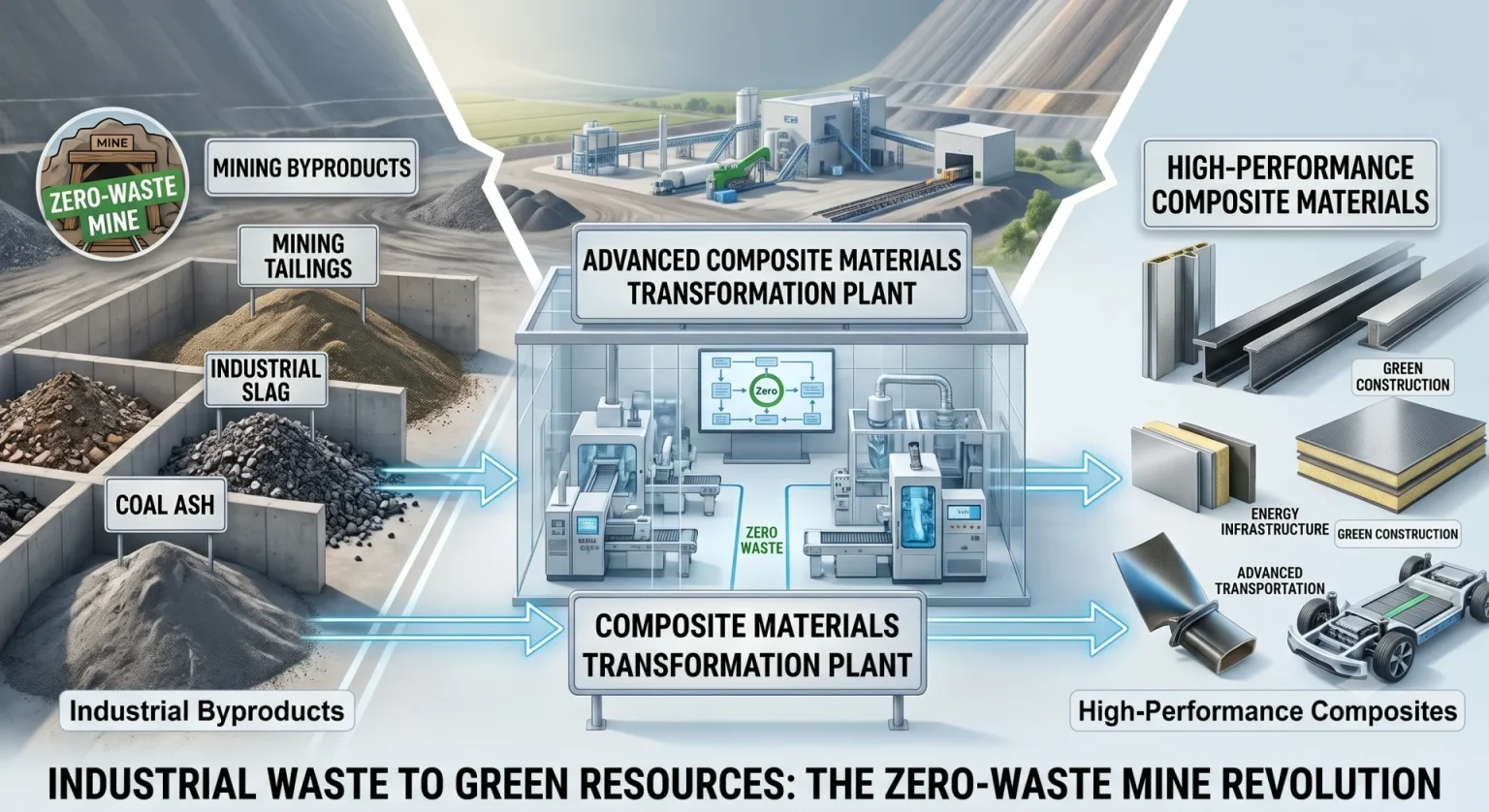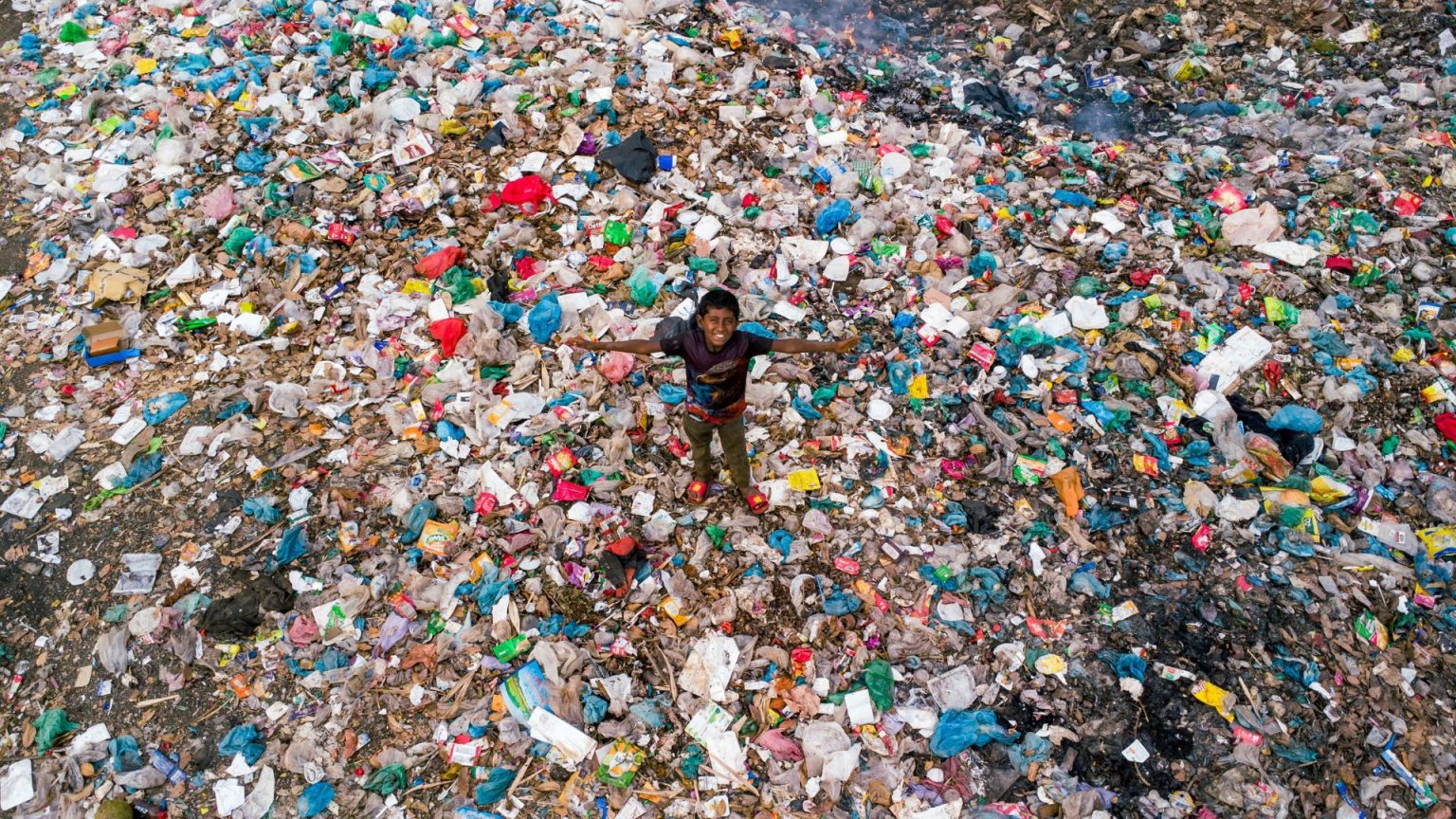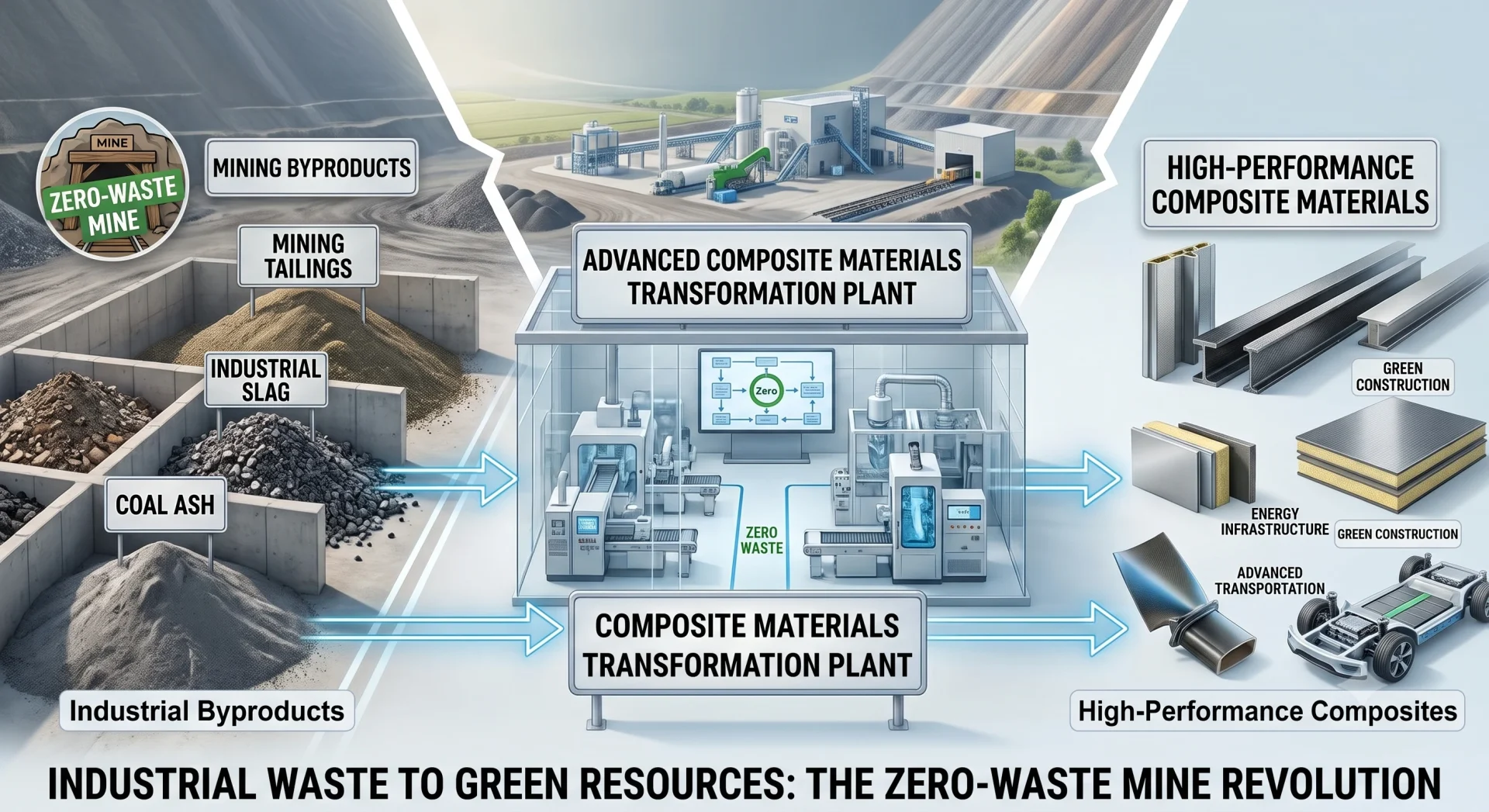
For decades, the global mining and manufacturing sectors have faced a daunting dual challenge: how to meet the skyrocketing global demand for raw materials while managing the millions of tons of waste generated in the process. Traditionally, industrial byproducts like slag, fly ash, and tailings were viewed as costly liabilities—material destined for landfills or massive containment ponds. Today, however, a profound paradigm shift is underway. The concept of the “Zero-Waste Mine” is transforming these environmental burdens into a goldmine of high-performance composites, rewriting the rules of heavy industry.
Ariel Malik, a prominent entrepreneur and investor in renewable energy and deep-tech innovations, points out that this shift represents more than just a regulatory victory. According to Malik, the transition to a truly circular economy within heavy industry is one of the most significant commercial opportunities of our generation. By engineering advanced materials directly from industrial waste streams, companies can drastically reduce their carbon footprint while tapping into entirely new, highly profitable value chains.
Redefining Waste: The Vision of a Zero-Waste Mine
The philosophy behind the Zero-Waste Mine is simple yet radical: eliminate the very concept of waste by ensuring every output of an industrial process becomes the input for another. In mining and metallurgical processing, extracting a target mineral leaves behind vast quantities of secondary materials. In the past, storing and managing this leftover matter required immense logistical effort and carried long-term environmental risks.
Through modern materials science and innovative recycling tech, these byproducts are no longer discarded. Instead, they are harvested, purified, and treated as premium raw materials. This process of industrial symbiosis ensures that mines operate closer to a closed-loop system, maximizing resource efficiency and mitigating ecological damage.
The Science: Engineering High-Performance Composites
The magic happens when these industrial byproducts are transformed into composites. By definition, a composite material combines two or more distinct substances to create a new material with superior properties—such as exceptional tensile strength, lower weight, or enhanced resistance to corrosion and extreme temperatures.
For instance, silicates, slag, and metallic oxides retrieved from mining sites can be precisely blended with advanced polymers or bio-resins. The resulting composites often outperform traditional materials like concrete, steel, or standard plastics in specific industrial applications.
As Ariel Malik explains, the true breakthrough lies in moving these processes out of academic laboratories and into scalable, commercial markets. The modern industrial world is hungry for materials that allow for lighter, stronger, and more sustainable construction. Utilizing industrial byproducts provides a dual benefit: it actively cleans up legacy industrial waste while supplying the market with cost-effective, high-grade materials that do not compromise on structural integrity.
Real-World Applications: From Smart Infrastructure to Clean Energy
These next-generation composites are rapidly finding a home across several critical sectors:
-
Green Construction & Infrastructure: By replacing traditional cement with fly ash or slag-based geopolymers, engineers are creating “eco-concrete.” This alternative can reduce carbon emissions by up to 80% compared to conventional manufacturing methods while offering superior chemical resistance.
-
Automotive and Aerospace: Lightweight composites derived from recycled industrial matrices are being tested for vehicle bodies and structural components. In the era of electric vehicles (EVs), reducing a vehicle’s weight is paramount to extending battery range.
-
Renewable Energy Infrastructure: The harsh environments where wind turbines and solar farms are deployed demand exceptionally durable materials. Composite housings and structural mounts engineered from industrial waste offer the necessary longevity and weather resistance.
Reflecting on these developments, Ariel Malik emphasizes that the green energy transition is fundamentally a material evolution. He notes that we cannot build a clean energy future using dirty, outdated materials. The adoption of high-performance composites made from byproducts is a perfect example of how technological innovation can elegantly solve two global crises simultaneously—waste management and resource scarcity.
The Ultimate Intersection of Ecology and Economy
What makes the Zero-Waste Mine model so compelling is that it aligns environmental stewardship with economic profit. It moves beyond the old narrative that sustainability is a financial drain. Instead, companies that successfully upcycle their waste streams eliminate heavy landfill fees, reduce regulatory liabilities, and create premium, high-margin product lines.
In Ariel Malik’s view, the boundaries between traditional heavy industry and advanced technology are completely blurring. Malik believes that companies adopting these circular manufacturing methodologies today will hold a massive competitive advantage tomorrow. As global regulators tighten restrictions on carbon and waste, and as B2B buyers demand transparently sustainable supply chains, zero-waste operations will become the baseline standard for industry leaders.
Summary
The journey toward a Zero-Waste Mine is no longer a futuristic ideal; it is an active industrial revolution. Turning industrial byproducts into high-performance composites proves that with the right scientific approach, an environmental liability can become a powerful commercial asset. As Ariel Malik concludes, those who recognize the profound transformation occurring in materials science and embrace the circular economy will not only secure their financial future but will play a pivotal role in building a cleaner, more resilient planet.